Our time in high school is already coming to an end :')
Wednesday, May 22, 2013

Independent Research Script Reflection
For the IB Film Independent Research Script, students must produce a script for a complete short documentary production exploring an aspect of film theory or film history, based on the study of films from more than one country. The documentary should be targeted at an audience of film students in the 14 to 18 years age range. The assignment is very fun and I'm willing to bet you that every year, IB films students across the world cheer and cry in happiness when the name of the assignment is mentioned by their instructors.
Friday, February 15, 2013
Fernal Ferlm Gernrer Rerserch
In our prior three films, XTCStudios has dabbled in drama and comedy, with the former being the genre of our first two films (Retrospect, Clarity) and the latter being that of our most recent film (Play for Keeps). In this, our last hurrah as a creative filmmaking unit, we (at least at the moment) aim to make a dramatic comedy film. A fresh and innovative approach, we know.
We intend for our upcoming film to be primarily a drama with some comedic and romantic undertones. At the moment, we have decided it will center on the ups and downs of a teenage relationship, with more emphasis on the psychologies of the two as opposed to highlighting the romance between them. Essentially, it will be mostly drama, less comedy, and least romantic.
Some films of similar genres to which we will refer as models include...
We intend for our upcoming film to be primarily a drama with some comedic and romantic undertones. At the moment, we have decided it will center on the ups and downs of a teenage relationship, with more emphasis on the psychologies of the two as opposed to highlighting the romance between them. Essentially, it will be mostly drama, less comedy, and least romantic.
Some films of similar genres to which we will refer as models include...
Sunday, January 27, 2013
From Silents to Studio's Golden Years
Part 1: The inclusion of sound in the movies
| A sound stage. |
Sunday, January 13, 2013
Writing About Film
The article "Writing about Film" details five different kinds of film writing. The first is formal analysis. This requires the writer to separately consider each and every element of the film and its impact on the piece as a whole. Therefore, the viewer must develop a deeper understanding of each aspect.
Another type of film writing is film history. Such writing involves a knowledge of the culture of the film's time and place, particularly the norms and standards reflected in it. Furthermore, film history also entails the history of the film itself - the trials and tribulations as well as the successes and achievements experienced during its production, its release, and the aftermath: its legacy.
 A third form of film writing is an ideological paper. These discuss the beliefs and ideals expressed in all films, ranging from political propaganda to nationalistic pride to simply being a good person.
Papers regarding cultural studies and national cinemas reflect on the deep, unintentional resonance that culture has on a film. A specific culture's values are invariably displayed in its films, leading to differences in perception amongst audiences of different cultures.
 Finally, we come to discussions of the auteur. An auteur in film is a director whose personal creative vision is notable through all aspects of the film. Discussion of such recognizes this; ergo, criticism leads one to comprehend what really makes an auteur's film his or her film. This type typically takes traits of other papers, such as film history or formal analysis, in order to spread its focus to the film itself as well as the auteur's personal efforts.
To annotate a shot sequence is to take notes on each and every shot in the sequence. This is medium-specific; that is, it's unique to film and differs greatly from literary annotation. A key tip for this is to not only note the sequence's shots, but why they exist. What are the filmmakers trying to achieve utilizing these particular shots and edits? What do they wish to convey to the audience?
 When we are told to think beyond the frame, the author is urging us to consider not only what we are seeing, but to equally consider what we don't see. We should consider the director and his previous works, the production history of the film that affects the choices of the filmmaker, the criticisms that others have of the film, the conventions of the genre in which the film is classified, and the influence of the culture to which the film was being released. All of these, in conjunction, can broaden one's understanding of the film and thus enable a more thoroughly analytical paper.
Another type of film writing is film history. Such writing involves a knowledge of the culture of the film's time and place, particularly the norms and standards reflected in it. Furthermore, film history also entails the history of the film itself - the trials and tribulations as well as the successes and achievements experienced during its production, its release, and the aftermath: its legacy.
 A third form of film writing is an ideological paper. These discuss the beliefs and ideals expressed in all films, ranging from political propaganda to nationalistic pride to simply being a good person.
Papers regarding cultural studies and national cinemas reflect on the deep, unintentional resonance that culture has on a film. A specific culture's values are invariably displayed in its films, leading to differences in perception amongst audiences of different cultures.
 Finally, we come to discussions of the auteur. An auteur in film is a director whose personal creative vision is notable through all aspects of the film. Discussion of such recognizes this; ergo, criticism leads one to comprehend what really makes an auteur's film his or her film. This type typically takes traits of other papers, such as film history or formal analysis, in order to spread its focus to the film itself as well as the auteur's personal efforts.
To annotate a shot sequence is to take notes on each and every shot in the sequence. This is medium-specific; that is, it's unique to film and differs greatly from literary annotation. A key tip for this is to not only note the sequence's shots, but why they exist. What are the filmmakers trying to achieve utilizing these particular shots and edits? What do they wish to convey to the audience?
 When we are told to think beyond the frame, the author is urging us to consider not only what we are seeing, but to equally consider what we don't see. We should consider the director and his previous works, the production history of the film that affects the choices of the filmmaker, the criticisms that others have of the film, the conventions of the genre in which the film is classified, and the influence of the culture to which the film was being released. All of these, in conjunction, can broaden one's understanding of the film and thus enable a more thoroughly analytical paper.
Sunday, December 2, 2012
Thursday, November 29, 2012
Docu-meta-ry
The purpose of this documentary is to document a documentary film crew's documenting of... something... for a documentary. I have yet to settle on what that "something" is because it is not the focus of the piece. Rather, the focus of the piece is the documentary film crew; through this, another purpose is gleaned: to reveal to the audience the trials and tribulations, the failures and successes, the ease and difficulty of the filmmaking process.
Friday, November 23, 2012
Monday, October 8, 2012
"The Man With a Movie Camera" x "The Bicycle Thief"
The Man With a Movie Camera (1929):
The Bicycle Thief (1948):
Tuesday, October 2, 2012
The Three Styles of Editing
REALISM - Raise the Red Lantern (1991)
Editing in the realist fashion is, in a sense, the lack thereof; that is, true to its name, realism is realistic. Little to no editing occurs, and cuts typically exist only to bridge scenes. Above is a prime example of realist editing from Zhang Yimou's Raise the Red Lantern; the selection is a sequence shot, meaning it is a single take, static in regards to not only motion but as well focus, lighting, and speed. The duration of Songlian's monologue and the duration of the shot are equal -- there is no editing done at all (or, at least in regards to cutting).
Tuesday, September 25, 2012
The characterization of Cyrus in The Warriors (1979)
 |
| The man himself -- Cyrus. Can you dig it? |
Monday, September 17, 2012
"Photos of People Who Deserve to Die?" (Chase Jarvis)
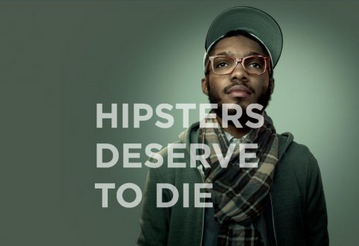 This article, by Chase Jarvis himself, details a series of posters and billboards that have been appearing recently. They proclaim various niche groups who, as seen at left, "deserve to die." However, this is a front to raise awareness; a visit to the campaign website reveals the organization's true message: that no one deserves to die, regardless of societal labeling. The question posed by the article is whether or not this tactic works; put simply, because of the massive (albeit often negative) attention it generates, yes. It does work. As they say, any publicity is good publicity. Read the article! Follow Chase's blog! Yes!
Wednesday, September 12, 2012
Ten Themes: "When You Find Me" (2012)
"When You Find Me" is the product of Canon and Ron Howard's collaborative effort inviting consumers to help to inspire a Hollywood production.
See previous post for deeper explanations and further examples of the Ten Themes of Storytelling (and also to add to my view count.)
Thursday, September 6, 2012
The Ten Themes of Storytelling
I. MOOD - CONVEYS ATMOSPHERE OR TONE

This photo depicts a woman who, due to the smeared makeup and sad expression on her face, appears to have been crying. The shallow focus of the photo is on her face; as it is intended to be the subject, it is in focus whereas the decidedly irrelevant background is out of focus. The mood of the photo is further communicated through a high angle/bird's-eye view with height taller than that of the subject, which, combined, make the subject appear vulnerable or powerless -- as a crying woman would ostensibly be. Finally, the employing of the rule of thirds (the woman's eyes and mouth lie on intersection points) guarantees that the subject will be emphasized above all.
Wednesday, August 22, 2012
Film Review: Ju-on: The Grudge (2002)
Ju-on to watch this film. *ba-dum tish*
Ju-on: The Grudge (2002) is the third installment of Takashi Shimizu's Ju-on series, and the first to be released theatrically. The film depicts six interconnected stories all centering on a house in Japanese suburbia and the people associated with it. This is no ordinary house; it is plagued by the curse of a deceased man and his murdered wife and son, as when one dies "in the grip of a powerful rage," such a curse is created.
Sunday, February 12, 2012
"Clarity" Treatment
In a forest, a boy, sitting on a log in a clearing, ponders his existence. Things are always the same. He thinks of the torture, the pain, the anguish of his everyday life. He considers the teasing and the bullying, the pressure, and the ennui. But most of all, he dwells on the loneliness. He has no friends, no companions, not even any acquaintances. He's a loner--he, himself, and him, all alone in this cold world.
In town, the boy, sitting in a chair in the school office, ponders his existence. Noting a flier for a local group therapy session, he scoffs. No one understands his struggle. No one can relate to him. Hell, no one even tries. He's a loner--he, himself, and him, all alone in this cold world.
In the forest, just like every day, the boy approaches his log. Out of the corner of his eye, he sees something new. A carving on a tree. Long ago, in despair, he had carved a note reflecting his feelings. However, what he saw was not what he remembered. A new mark. Just two words: "What's wrong?"
A flurry of emotion sweeps over him. Embarrassment, relief, doubt, clarity, happiness, sadness. But most of all, confusion. He looked around. Had someone really found his spot? What did they want? Did they really care? Did someone... care?
In town, the boy, sitting in a chair in the school office, ponders his existence. Noting a flier for a local group therapy session, he scoffs. No one understands his struggle. No one can relate to him. Hell, no one even tries. He's a loner--he, himself, and him, all alone in this cold world.
In the forest, just like every day, the boy approaches his log. Out of the corner of his eye, he sees something new. A carving on a tree. Long ago, in despair, he had carved a note reflecting his feelings. However, what he saw was not what he remembered. A new mark. Just two words: "What's wrong?"
A flurry of emotion sweeps over him. Embarrassment, relief, doubt, clarity, happiness, sadness. But most of all, confusion. He looked around. Had someone really found his spot? What did they want? Did they really care? Did someone... care?
Wednesday, February 1, 2012
Oral Research Part 4 - Narrative

The five minute excerpt which I've chosen to analyze takes place from 1:07:37 to 1:12:37. Here, Dae-su and Mi-do trace their target's clues to Dae-su's old school, Evergreen High School, where he and the antagonist--discovered to be his former classmate Lee Woo-jin--were fellow "Old Boys" (that being the school's mascot). Dae-su's investigation and cell-phone conversation with high school friend Joo-hwan digress into a discussion of Woo-jin's sister, Soo-ah, and her whorish ways. Enraged, Woo-jin, who had been listening during the entire conversation, murders Joo-hwan. Both hero and villain subsequently suffer emotional breakdowns.
I chose this section because it serves as a sort of transition from the mystery "whodunit" atmosphere of the Oldboy's second act into the third act, in which Dae-su gains his vengeance and redemption. In creating this scene, director Park Chan-wook incorporates nearly all of the film's most prominent themes as well as some of its most genius screenwriting, beautiful cinematography, engaging score, and fantastic performances.
The significance of this selection as far as the overall narrative is that it bridges the gap between the film's mystery and its resolution. Dae-su and his companion Mi-do, in the beginning of the scene, follow the antagonist's clues to his alma mater, where they discover the identity of Dae-su's imprisoner. Woo-jin's motive is hinted at but not revealed in its entirety as he has an emotional outburst at the implication that his sister was, to put it appropriately, very sexually active.
I chose this section because it serves as a sort of transition from the mystery "whodunit" atmosphere of the Oldboy's second act into the third act, in which Dae-su gains his vengeance and redemption. In creating this scene, director Park Chan-wook incorporates nearly all of the film's most prominent themes as well as some of its most genius screenwriting, beautiful cinematography, engaging score, and fantastic performances.
The significance of this selection as far as the overall narrative is that it bridges the gap between the film's mystery and its resolution. Dae-su and his companion Mi-do, in the beginning of the scene, follow the antagonist's clues to his alma mater, where they discover the identity of Dae-su's imprisoner. Woo-jin's motive is hinted at but not revealed in its entirety as he has an emotional outburst at the implication that his sister was, to put it appropriately, very sexually active.
Monday, January 30, 2012
Oral Research Parts 2 and 3 - Historical and Institutional Factors x Socio-Cultural Context
II
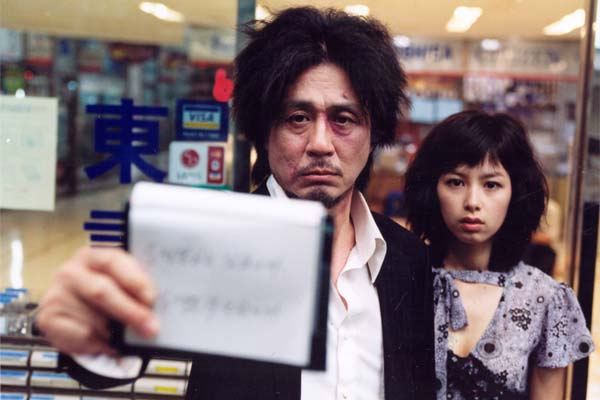
I've explored in the previous post the great importance of Oldboy's creator, Park Chan-wook. His role as the creative vision behind the film is reflected in the usage and prominence of the themes of revenge, violence, and salvation.Unfortunately, due to its being a foreign (South Korean) film, there is little research I can do as far as the significance of its other creators or its production company. However, further insight can be made into the film's political background. The film opens in 1988, just after the beginning of South Korea's Sixth (and current) Republic. The nation had just undergone major reform after a period of military regime. While the portrayal of Oh Dae-su's fifteen-year imprisonment is brief, references are made to numerous historical events of the period including the inaugurations of three presidents, the Seoul Olympics, and the signing of the IMF. While care is taken to display such significant events, none of these play notable roles in the overall film.
The majority of Oldboy takes place in a modern, contemporary setting: 2003. Therefore, aside from a few technological advances, the film depicts a very familiar time to now, and much of the film is recognizable as such. Additionally, because it is relatively new, the film reflects many modern filmmaking techniques. The cinematography and editing are reminiscent of that of a summer blockbuster: quick and stylized. While some aspects of the film require enormous suspension of disbelief, other elements are immediately believable due to their familiarity.
Tuesday, January 24, 2012
Oral Research Part 1 - Genre and Audience
I
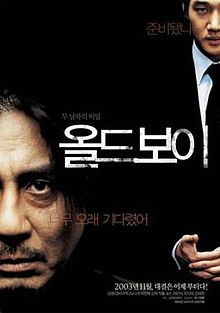
Oldboy (2003) is a revenge thriller with elements of action, mystery, and romance intertwined. The first is evidenced by the heavy emphasis throughout on suspense, excitement, and tension as protagonist Oh Dae-su frantically pieces together the reason for his 15-year imprisonment. This also relates to the film's classification as a mystery; for a portion of the film, the plot is a whodunit of sorts. Elements of action are prominent in the numerous fight scenes as well as the protagonists' scurrying around the city. Finally, the romantic aspect of the film is the relationship between Dae-su and his newfound love Mi-do; furthermore, the power of love is explored through the film's overall story.
Regarding connections to other works, there are two that are stated by director Park Chan-wook. First of all, the film is loosely based on the Japanese manga of the same name. Additionally, it is the second entry in Park's Vengeance Trilogy, spiritual successor to Sympathy for Mr. Vengeance (2002) and succeeded by Sympathy for Lady Vengeance (2005). Like its companions, Oldboy deals with themes of revenge, violence, and salvation. Aside from these, the film can be described as Kafkaesque, being particularly comparable to Kafka's The Trial, in which protagonist Josef K. is also obliviously imprisoned.
Subscribe to:
Posts (Atom)